
Rookie Review: The Truth Behind Marvin Harrison Jr’s Rookie Season
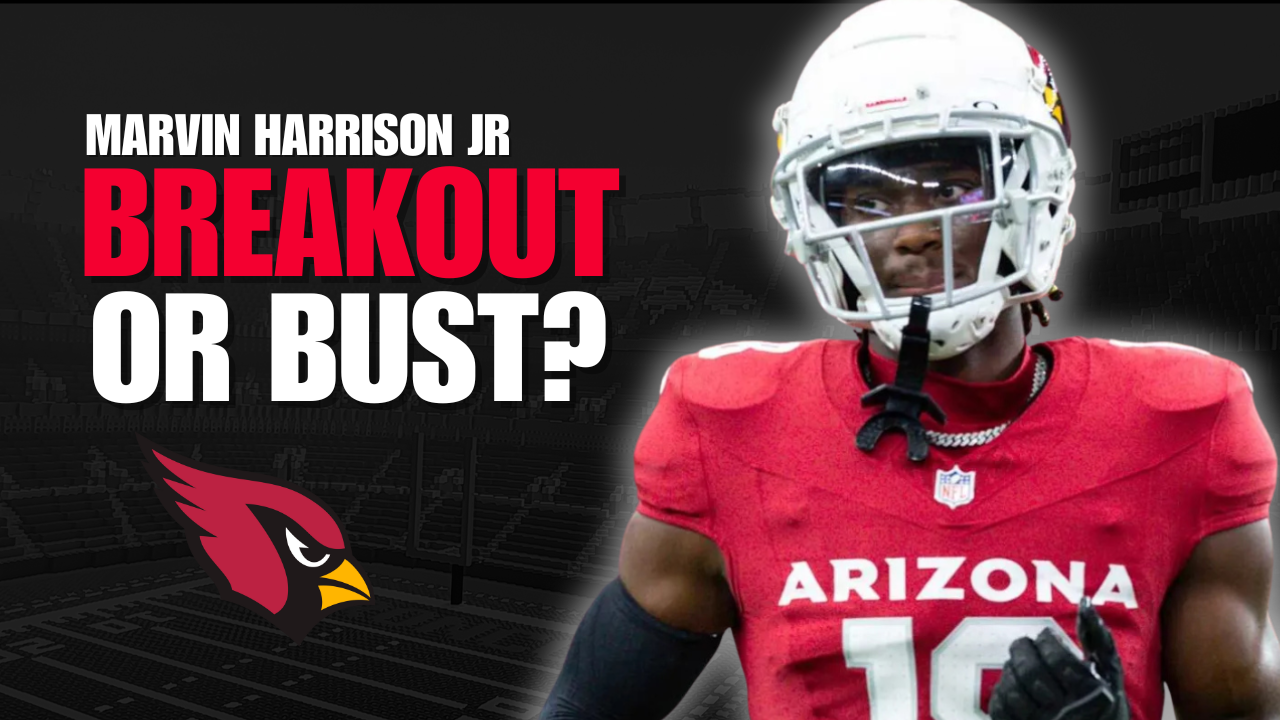
Marvin Harrison Jr: Breakout or Bust?
Marvin Harrison Jr.’s rookie season fell short of the lofty expectations that followed him heading into the league. After being labeled a generational, can’t miss prospect and being drafted to the Arizona Cardinals, many believed he was a shoo-in to make an immediate impact. But Harrison left fans wanting…and waiting. His path to stardom has been rockier than expected and fans have been searching for a culprit to blame. Many have pointed the finger at offensive coordinator Drew Petzing for not using him properly. Maybe it’s Kyler Murray not targeting him enough. Or is Harrison the underlying issue, with him being slower and unable to separate? What if I told you the answer is none of the above.
Here’s the real truth to Harrison’s rookie season. Why Kyler, Harrison and Petzing all deserve the blame, what they did to deserve it and what they need to do for Harrison to not continue down a disappointing path.

Why Kyler Murray is to Blame
When Harrison was initially drafted, it seemed like him and Kyler would form an unstoppable connection. What’s stopping them?
It boils down to fit. They don’t fit well together. Harrison has seemingly been put into a sacrificial role, constantly clearing out and running these go and fade routes. On the surface, it seems like a Petzing issue for putting him on these routes. In reality, it’s more because of Kyler.
Petzing has dedicated the entire offense to making Kyler comfortable. which seems like a good thing. Not for Harrison. The reason Petzing puts him on these routes so much is because Kyler loves throwing them. The Cardinals threw the 7th most fade or go balls last year. The reason DeAndre Hopkins and Kyler worked so well is because he was at his best throwing these back-shoulder balls on fade routes and Hopkins was elite at making those contested catches.
Kyler is an aggressive quarterback. He wants explosive plays. But since he’s not great throwing over the middle, which is the best way to gain these explosive plays, the best alternative is by using fade and go routes. And Kyler is great at accurately throwing them. The problem is, Harrison can’t catch them like Hopkins could.
His strength lies in his routes running; being able to use his salesmanship and create separation, specifically on in-breaking routes. Per ReceptionPerception, three of Harrison’s four most successful routes were in-breaking routes. The dig route (87.5% success), post (84.2 success) and slant (81.6% success) were all amongst his most successful routes. However, all of these routes break over the middle. And Kyler rarely throws over the middle. His height limitations hinder his sight which causes him to steer away from throwing over the middle, especially downfield where Harrison often ended up.
On throws over 10 yards, Kyler threw over the middle only 17 times. Meaning in the areas where Harrison had the most success, Kyler wasn’t looking at. Their strengths don’t align. Harrison thrives over the middle which is Kyler’s weakness. Kyler thrives throwing fade/go routes but contested catching is Harrison’s weakness. Harrison was targeted on 24 fade/go routes and caught four of them. They simply don’t mesh well together.
Why Marvin Harrison Jr. is to Blame
This article has mentioned Harrison’s struggles in contested catching but it can’t be understated how bad he was at it. It was essentially the X-factor behind his lackluster performance. It’s especially disappointing considering his size. With his imposing build at 6 ‘4, 209 pounds, contested catching being a glaring flaw is jarring.
Part of the problem with his contested catching is his lack of physicality and it’s evident in other areas of his game, notably in his release package. He gets jammed too often. His hand fighting is inconsistent, letting defensive backs get into his frame and he doesn’t have the physicality to recover from it.
Additionally, Harrison lacks the craftiness needed to be able to maximize volume in Petzing’s offense. In a passing scheme anchored by quick and short throws, getting the ball to dynamic playmakers is the priority. Players that can be a spark plug and create after the catch. Trey McBride is the perfect embodiment of this, which is why he gets so much volume. Harrison is on the opposite end of the spectrum. He forced a whopping one missed tackle last season, likely explaining why he’s an afterthought in the short passing game.
Harrison is assigned to be the offense’s catalyst, getting sent downfield to gain the explosive plays. He just hasn’t been able to convert on those oppurtunities…yet. As good as the sound of explosive plays may seem, it sacrifices the ability to get consistent volume. His targets fluctuated over the weeks. Although it got better later in the year, he wasn’t able to capitalize on the extra opportunities and maintained his inconsistent production.
Why Drew Petzing is to Blame
Petzing runs a conservative offense. He wants quick and easy throws. Kyler ranked 8th in short pass attempts and 4th in quick pass attempts (under 2.5 seconds to throw). That’s not ideal for a downfield target like Harrison who ranked 9th in air yards/target. Petzing’s offense is a nightmare for fantasy receivers. It’s run heavy, ranking 22nd in pass play percentage. It often uses 13 or 12 personnel. And there’s rarely downfield passing or explosive plays, ranking 26th in deep throws. The offense prioritizes running backs and tight ends.
Additionally, Petzing made zero effort to get Harrison involved. He was rarely a part of the short passing game and he got zero designed targets. It’s a bit understandable since you’d usually want to design targets for playmakers after the catch and Harrison doesn’t fit the bill but Petzing didn’t even give him the chance. He was the 4th pick. He should be a priority in the offense but Petzing didn’t even try to get the ball to him. It’s like if Petzing bought a maserati just to show it off, rather than actually using it and driving it. He isn’t letting Maserati Marv help drive downfield by not involving him in the short game enough and letting him make a play.

However, the biggest complaint I have with Petzing is his inability to adjust. It’s evident Harrison was atrocious in contested catching situations. Yet Petzing continued to put him in these situations and watched him fail constantly. Harrison ranked 3rd in contested target percentage.There’s a certain point where he needs to realize he needs to pull the plug, especially when he has a contested catching specialist lined up opposite of Harrison.
Michael Wilson’s calling card is his physicality and strong hands which is perfect for Harrison’s role. On vertical routes, Harrison had a catch percentage of 28.9 while Wilson’s was 41.2. On contested catches, Harrison had a 28.6% catch percentage while Wilson’s was 50. Wilson had only 3 less contested catches while having 21 less contested targets. Wilson is better suited for Harrison’s route tree.
Harrison’s route tree isn’t as bad as the community may make it seem, constantly bashing Petzing for sending him on fade/go routes. But he’s just trying to capitalize on Kyler’s strengths, which isn’t a bad thing. The problem is Petzing’s unwillingness to recognize Harrison’s struggles and adjust, ultimately leading to his underwhelming season.
What Went Right
Although Harrison didn’t pay dividends on his initial draft hype, it was far from a debacle. 800 yards and 8 touchdowns as a rookie is nothing to scoff at. Contrary to popular belief, he showcased the same separation skills he was known for in college. Harrison’s ability to get in and out of breaks at his size is impressive. He also favors using a nasty stairstep technique that has been highly effective. The flashes were there and he had a respectable rookie season. He just needs these flashes to show up consistently.
How Harrison can Breakout
A lot went wrong in Harrison’s rookie year. So what needs to happen for Harrison to break out? Here’s two scenarios.
1. Harrison improves as a contested catcher
This is the more obvious answer but also the more realistic one. If Harrison can capitalize on the high volume he’s getting on fade/go routes, he’ll be a monster downfield. Harrison bulking up to 220 pounds in the offseason is a step in the right direction. Hopefully it’ll fix his physicality problem and allow him to box defenders out better. If Harrison can continue to earn Kyler’s trust, the volume should only shoot up.
2. Kyler starts trusting himself to throw over the middle more
The middle of the field is where Harrison thrives. He found the most success on in-breaking routes but was rarely targeted due to Kyler’s tendencies. Harrison was targeted over the middle only 20 times. However, in the rare occurrences he was targeted, they had a good connection. Kyler had a 65% completion percentage when targeting Harrison over the middle. There just wasn’t enough volume. If Kyler starts trusting it more, Harrison’s strengths could be properly utilized. However, this scenario is significantly more far-fetched than the first. Kyler is a 6 year pro and has always steered clear from the middle and doesn’t show any signs of changing it.
Wrap Up
If I had to choose who burdens the most blame for Harrison’s dispiring season, it would be Kyler. But not for the reason you’d think. It isn’t a talent issue. It isn’t a volume issue. It’s a fit issue. Kyler’s tendencies don’t align with Harrison’s strengths. In order for Harrison to be successful with Kyler, he’ll have to completely change his game and go from a separating specialist to a contested catching monster. There’s a chance he could pull it off. Going towards the physical route and bulking up is promising. However, I don’t think he’ll be able to live up to his glorifying initial draft hype. As long as he’s with Kyler, his true strengths aren’t being maximized and improper utilization is a recipe for disappointment. He likely won’t be truly disappointing but I don’t think he’ll reach the upside that was advertised. That’s not to say he won’t be a good receiver.
He’s a great Redraft value, going in the late third-early fourth round. Harrison will outperform his ADP and should be a target for Redraft leagues. With his improved physical tools, he should continue to build onto his rookie year and form a better connection with Kyler. Dynasty is a different story. It might be best to sell him and take advantage of someone clinging onto his pre-draft glory. There are many believers still aboard his hype train. His trade value is still incredibly high, and it’s best to exploit it. Although he’ll likely improve, he won’t reach the status everyone was initially aiming for.